Holy Joe

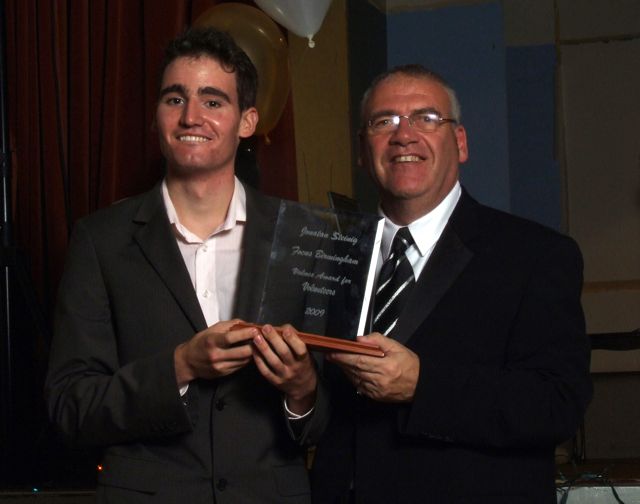
Focus on Finding God, By JONATHAN STEINIG

June 9, 2009 · Leave a Comment

Focus on Blindness is an organisation which provides services and support for those with sight impairment or/and multiple disabilities.  Since September 2008 I have volunteered part time in the Elisabeth Gunn Centre which is the multiple disability service unit of  Focus on Blindness. In this unit, service users with multiple disabilities (e.g. difficulties with communication and mobility) come Mondays till Fridays from 9am until 3pm to obtain complete support which includes health care, physiotherapy and food. My role at Focus is to help service users and to assist staff members if help is required. My main tasks are feeding service users, supporting during healthcare and assisting in activities.

Focus tries to help service users have as much independence as possible. Nevertheless, support is necessary even during dinner times because many service users do not have the essential senses and mobility to do something which for majority of society is something very easy, such as eating.

Healthcare is essential because in many cases service users have severe health problems. Besides important medical services, users also get psychotherapeutic support. Because I am not a trained healthcare member of staff, I can only assist the psychotherapists while they, for example, try to stretch service users who are sitting in wheelchairs.

Fun and enjoyment is an important column of Focus: Service users can participate in “Jabadeo” which is an activity session where movement and games are combined in an entertaining way for all service users.

Decoration and arts are a pleasure for everyone, especially during Christmas, and even sight impaired service users can be creative by feeling the difference of the structure of each material.

As you can see, the work for Focus on Blindness offers great variety. The examples given in this article do not cover everything I have to do but give a good impression of my voluntary work.

Volunteering for Focus and the Jesuits is a great honour, but at the same time it is very hard and gives rise to doubt. Helping people who live non-desirable lives, including those who are living on the margins of a society, is a challenge for one’s own faith. Where is God in the lives of service users of the Elisabeth Gunn Centre?  And why did he create people with multiple disabilities while others live successful lives with good health? It is not possible to answer these questions in the “right” way. It depends on the character and the faith of each person. It has not been easy to find an answer to these questions, but up to now I have found an answer which is acceptable for me: God is surrounding the people who suffer more than anyone and anywhere else. Indeed it is confusing but, when I see how carefully and supportively the centre and the staff members take care of the service users, I notice that God is in all these people who help and support the service users. God is very close to all service users and gives them a reason to live even in their situation.

Jonatan is from Germany. He can be found at Focus or volunteering with schools in the woods with CSV. He can also be heard on internet radio on Sunday afternoons at JESFM on 1000mikes.com

→ Leave a CommentCategories: Uncategorized

Tuesdays in the Kingdom, By ADAM DICKSON

June 9, 2009 · Leave a Comment

Adam reflects on how his time volunteering at an advice service and drop-in facility for asylum seekers, refugees, and migrant workers helps him understand the Kingdom of God

Today is a Tuesday, and as I walked from my JVC placement at Rainbow Haven to begin my journey home at the end of the day, I breathed a frustrated sigh of relief.

Not long after I arrived this morning I was whisked away to handle advice work for no less than five people all with very different and difficult problems. After three infuriating phone calls to help sort out one of our client’s gas and electricity supply, I moved onto sharing another immigrant lady’s struggle to make sense of various different housing application forms and letters of which even I – as a native Engish speaker – could only just barely make sense. While this was going on, yet another client needing help with calling an engineer for her faulty BT landline was herself getting understandably irate over the fact that I had promised her three times I would get round to her problem next, yet failing due to the equally-complicated ones already landing in my lap (and forming quite a mess as they did).

When I had finally succeeded in at least trying to address everyone’s individual difficulties at the end of my working day, and walking away with the profound feeling that I had made little if any difference at all, my overall sentiments of complete emotional exhaustion at that point were summed up in a four-letter word that I can’t utter inside the parameters of socially-acceptable conversation. My immediately proceeding thought was that I wouldn’t have changed my day for the world.

To me, not only do experiences like these characterise what it means to be a Jesuit volunteer, they also give thorough context to what it means to be a follower of Christ. I have long believed that social justice is an integral and inextricable component of the Gospel, rather than some “added extra” that we take up if we hold fast to it. Jesus’ mission to demonstrate his supreme love and authority to the world came both in the agency of his preaching and in his truly radical compulsion to embrace the poor, the meek, the lepers, the workers, the prostitutes, and all of those individuals whom society had unjustly pushed onto its margins.  At Rainbow Haven I wholeheartedly believe that I share in Jesus’ mission. Especially so within Britain’s current political climate where migrant peoples are viewed by a significant portion of the general public with suspicion and disdain, it is a privilege for me as a Christian to be able to work alongside and stand in solidarity with them.

While I had sympathised with the plight of asylum seekers and refugees for some while before beginning my Jesuit year, I confess that my work placements have made me more aware of the struggles such individuals and families face. Without getting too detailed, it is sufficient to say from my own experiences thus far that the mountain climbed for someone seeking asylum in the UK is steep, rocky, and embedded with different forms of adversity at each milestone. Many such people often end up destitute if their claims have been rejected, leaving them without any form of recognised support and no means to return to their country of origin even if they wanted to. They then have no choice but to rely on a government voucher system, British Red Cross food parcels, and drop-in centres like us who are willing to lend them advice and advocacy. It is clear to me much more so than ever before, how asylum seekers are so constantly faced with persecution, fleeing from it in their home nations only to be faced with yet another form of it, cleverly wrapped up and disguised, in the package of bureaucracy and government political agenda.

The Tuesdays I spend at Rainbow Haven, while often taxing, are always rich and rewarding. It can be difficult to hold back tears when listening to someone’s story of the hardship they have faced, and yet it is also a mysteriously spiritual thing to recognise that asylum seekers, like any other “marginalised group” of people, have a fundamental diversity and humanity. While that surely seems like the most obvious of points, it is nonetheless one we often forget, whether we are uninformed of the facts and keen to lump all immigrants into the same category, or whether we are impassioned about justice and only end up viewing as projects the very people we endeavour to serve.

On one memorable occasion, a client was recounting his case to me and going into great detail about all of the horrendous troubles he has had to deal with… from facing eviction, to not being able to provide either for himself or his family, to severe health issues, etc. Yet, after all of this, and through visibly having to stop himself from trying to cry, my new friend explained to me how much of a strength his Christian faith was to him. At the end of his heartwrenching account, he reflectively trailed off by saying that he would “give it to God.” Experiences like that really humble me, and make me realise that those who are suffering often have far more to teach me about Christ than I have to teach them! This is one of the many points that sets the JVC year apart from other forms of campaigning and activism; it brings you face-to-face with the issues in that you share some of the frustrations the poorest are having to deal with, even if it can only ever be in part.

While I have much to speak highly of regarding my placement at Rainbow Haven, it can also be challenging and draining, but (odd as it may seem) in a very positive way. As a Christian, I feel called to be a peacemaker in a world of violence, and being of unconditional love and service to those who have faced war and persecution has become for me an essential part of my own spiritual growth. Similarly, the difficulties faced by such people upon reaching the UK and having to engage with our system also highlights to me the importance not only of working with others at the grassroots level, but also of challenging the existing political systems and structures which lead certain people to become sidelined and excluded. Our service to the marginalised must necessarily encompass our willingness to non-violently subvert the unjust social and economic structures of our time, just as Jesus’ own ministry was itself a subversive challenge to the authorities of Caesar and the corrupt religious institutions.

Being a Jesuit volunteer may only last for the course of a year, but its ethos is, in my opinion, thoroughly rooted in the ways all Christians should endeavour to conduct their whole lives. Living in the heart of Manchester and witnessing first-hand the problems different people face everyday within its surrounding areas is a stark reminder of how the kingdoms of the world fail those who live under their subjection. The Kingdom of God, on the other hand, begins with these very people, and gently leads its citizens to renounce what they have, share their resources and possessions, live in simplicity, and stand in loving solidarity with those living at the edges of the Empire. This is what us JVC-ers are doing with our year, and long may it continue in the prophetic imagination of our own lives forevermore!

Adam volunteers part time at Church Action on Poverty, working on their Changemakers project, and part time at Rainbow Haven.

→ Leave a CommentCategories: Uncategorized

The Voice of Fireside, by PETER WACHIRA

June 9, 2009 · 1 Comment

If you ask any native of Birmingham where Fireside is, they will direct you with ease and some will endeavour to describe what it does.

According to Sister Sabina, who was among the pioneers of this project, the name Fireside has a religious significance. It means a fireplace, a warm place where Homeless people tormented by cold nights could come in to warm themselves and share a cup of tea.

It has been in operation for the last fifteen years giving a dedicated service. Since last year, Fireside merged with another organization dealing with alcoholics and people with drug problems called Sifa, hence the new merged project is now known as Sifa-Fireside. The Fireside is located on Pershore Street whilst Sifa is on Lower Essex Street. Both places are engaged in similar theological praxis of uplifting, helping, restoring disfigured and marginalized people from streets of Birmingham. Members who come to Sifa and Fireside have different stories of their lives. Members are an amalgamation of people milling together from different walks of life, nationalities, status, genders, ages, religions, and personalities. The number of members has increased due to a number of factors of hiked lifestyle not to mention strings of Credit Crunch.

I work in Sifa Fireside on Thursdays and Fridays. Both days are similar in that I begin my work at nine o’clock at Sifa. Here members are served with breakfast from nine o’clock to eleven o’clock. My assistance is highly appreciated in the kitchen department. I help in serving breakfast of stuff such as baked beans, porridge, cereals, toasting bread, preparing tea and coffee and washing up because we do not have a dish washer. That means Sifa’s kitchen is a beehive of activities happening simultaneously. From eleven, members and mobile staff leave to the next place of refuge that is Fireside.

Between eleven and Lunchtime members with needs such as clothes, shoes, foodstuffs and showers especially for rough sleepers are ushered in first. Before lunch other members are let in for warmth of tea and discussions. I have been attending these discussions which vary from day to day depending on the staff in charge. At times we have meaningful discussions on Music, Talents, Sports, Christmas and Brainteaser questions. It was at this juncture that I reckoned with the wisdom that you never underestimate people from their looks. Some of people are genius and experienced beyond my imaginings, but only handicapped by life’s situations. Being on streets is a situational problem not to do with them as persons or their look of life. At around noon lunch is served which is always a surprise because there is no menu and depends on what is available and the day’s chef.

At lunch time I help other staff and volunteers in whatever is pertinent. Sometimes I collect plates and cups, help in serving lunch, and at times doing coffee, tea or juice refills. Occasionally at lunch time I sit near members and have chats with them, some stories are really moving and you really pity them. Some members are very honest to share their struggles and pains of their life and expectations. It was here that I realized and saw the words of Nietzsche as they are reckoned in the book Man’s Search for Meaning by Viktor Franklin that “He who has a why to live can bear with anything.”

Some of the members have taught me life’s lessons. They have a solid faith, especially total dependence on God. This is a very strange country and time where people put lots of faith and securities in material things for futurity and survival. I would think that credit crunch was a test to the triviality of life’s securities and hopes.

The daunting challenge is to discern who the genuine homeless people are. Some are homeless voluntarily whilst another group are out involuntarily. Some members drop in to have a free meal and have a home to retire to. This issue keeps bothering us because it disguises the whole idea of the project. I have talked to a good number of members, and have clicked well with a number of them who are open and listen to my views. Some have really appreciated my company, especially the new comers. I have managed to speak to some in French and Swahili and make them feel at home.

After lunch the majority of the volunteers leave the premises and I make my way to the basement where we do sorting and packing tins of foodstuffs in shelves. In November we had many donations from harvest festivals. Fireside is a widely known project in Birmingham, so we received loads of foodstuffs and clothes from colleges, institutions and organizations. Our shelves are filled to capacity and we have still plenty of stuff pending to be sorted out but space is limited.

It is here in the basement that I spend quality time on my personal evaluation. Once here in the basement, it is very quiet and lonely due to its isolation, I recall what has happened during morning session. It is here that I resonate with experiences and stories shared by members and effect they have on me. Not all people appreciate what we are doing for them, and some feel that we are wasting time. One member had the audacity to tell me off. “This is not an era of doing charity work when all brighter people are chasing after the elusive quid.” He challenged me to rethink my commitment to JVC and the values it upholds. Another member was telling me that voluntary work does not count as work in this country because you are not earning money. In some occasions I had very interesting talks that were uplifting but other days were hopeless when I met critical and negative thinkers who looked me askance. I find it very interesting that some people do not differentiate me from Jesuit novices; they think we have the same formation, status and dreams of becoming priests. Some of the members are very critical about the Church, especially the Catholic Church. This is a generation that has nothing to do with the Church, though they do respect religious figures like nuns, but they see themselves out of that circle of religiosity.

There are many other things that happen here, I work alongside a big team of dedicated staff and volunteers who buoy and help me stay the course in spite of all challenges I face. What have written is to sum up my major experiences and reflections and could not include the many other things that happen here.

Peter is from Kenya. He can be found thinking deep thoughts in the basement at Fireside or helping at Brushstrokes in Smethwick

→ 1 CommentCategories: Uncategorized

What a Lovely Job! ;) By DIANA PERMATA SARI

June 9, 2009 · Leave a Comment

“What is your favourite food? I like pizza!!” said one of the Somalian kids who had been in U.K for only 2 weeks. I meet them once a week in Kings Norton High School, Birmingham. Playing Jenga, scrabble, eating sweets and fruit, and laughing together are all the activities that I do every Wednesday there. What a lovely job!! ;)

On Thursday afternoons, I participate in a family learning programme in Heartlands High School, Birmingham. It’s a programme for refugee families who have kids that study in that school.  We discuss anything that is related to refugees or asylum seekers. We do this in an interesting way, such as playing games! It’s so nice to meet, have lunch with, chat with, and laugh with families from many different countries. What a lovely job! ;)

Every Friday morning I run a session in a hostel for newly arrived people. I almost forget how smelly the rooms in that hostel are because I always have a great time with all the kids there. We play with lego and baby dolls, we dress up, and sometimes I teach them craft activities. Some of them can’t speak English, but we still have fun together. I won’t forget when an Iranian girl said to me: “no…no…speak English! You nice”. That was the best moment from my first day!! What a lovely job! ;)

My supervisor and I took young refugees on a trip to the Back to Backs House – a place that tells about the history of Birmingham. What a lovely job! ;)

We will have another trip to London! What a lovely job! ;)

Now the question arises: where can you find this lovely job?

This seems like a job advertisement! Hehehe ;)

This lovely job with lovely people is with The Children’s Society which is my JVC placement. Our office is located in the Jewellery Quarter, Birmingham. It’s nice because it is surrounded by a lot of expensive jewellery shops ;)
Working with children and young refugees is fantastic! They are really lovely and nice. It always makes me happy when they smile and say “Hello.”  This makes me really admire them because I know that some of them have very sad stories. I’m happy when I see them happy and through them I can see that HE also smiles at me! ;)

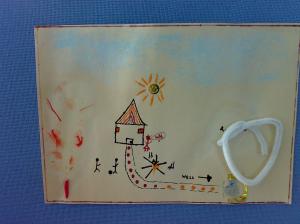
Picture by 10 year old from Iran

Picture by 10 year old from Iran

Let the little children come to me, and do not hinder them, for the kingdom of God belongs to such as these”         (Luke 18:16)

Diana is from Indonesia, she can be found smiling and enjoying life around Birmingham.

→ Leave a CommentCategories: Uncategorized

Washing Up With Joy, by JIM SOOK KIM

June 9, 2009 · Leave a Comment

Jin Sook reflects on how her work with homeless people at the Booth Centre enables her to see God in a difficult situation…

In the Booth Centre we have a lot of activities such as pottery, poetry, painting, model making, walks and so on. We also have a drop-in day in every Tuesday and Thursday morning.

When we have an activity I help the tutor and also join the art activity with people.
As we doing the activity together we can talk more and we can find each other’s talent in some area like painting or poetry. We read our own poems with a mike and I read my Korean poem in Korean and in English. When we are drawing pictures we encourage each other and enjoy ourselves too. While people join the activity they stay away from drugs or alcohol, so even though it is just 2 hours I think it is good for them.

Our centre is very small but I think it’s amazing that we run a lot of activities for people. Maybe because we have small space we can be closer and listen and talk and be friendlier.
Not only are we running the activities and serving food, the team at the centre listen to people with problems who want to talk about their situation.  We try to solve their problems and help them with what they need.  If we don’t have a certain kind of service like shower or laundry and so on, we introduce someone to another day centre so our staff in the Booth Centre are always running all over the place (especially my brilliant supervisor Kevin).

I also see people who have drug or alcohol related problems. Sometimes when someone has taken drugs or drank alcohol, they change but I know that they are good person without it. We encourage service users to volunteer, and when I see them help us, I feel so strongly that they want to overcome their problems and settle down in a normal life.

As time goes by, I can feel Booth Centre really works for homeless people.
so even though sometimes I do very little things I hope my work will be helpful to the Booth Centre and I can do it with joy.  For example, at first I disliked doing the washing up a lot because washing up is the thing I dislike most in the world, but suddenly I thought about how Jesus is always humble and how he was in the lowest place to serve other people. So if he can do it, I can be happy making tea of coffee. I can do it gladly. It is still sometimes it difficult but I try to remember.

Hmm…at this moment, my English is not very good so I don’t understand everything when I hear people’s stories and I feel so very sorry but I hope as time goes by I will be able to understand them better.
I saw one man who comes to the centre and heard that one year ago he was a very serious alcoholic but now he is looking so good. I hope, this year, I see that happen again!!

Jin Sook is from Korea. She can be found smiling over the washing up at the Booth Centre or supporting Prisoners’ families at Manchester Prison Visitors Centre

→ Leave a CommentCategories: Uncategorized

Wider Community, By DANIEL HENN

June 9, 2009 · Leave a Comment

Daniel writes about life in the wider community of Liverpool and how this works with his life as a JVC volunteer…

It is a good experience to also have some friends and activities outside of the community and placement, without that you don’t have the chance to meet new people and to get another view on the things. Once a month I visit the Samuel Group. It is a group of young people speaking about our vocation and sharing the Lectio Divina. It is nice to meet other young people, to speak about the experiences in your normal life and how you can find God there.

Because of that, I’m also visiting the student chaplaincy here in Liverpool. I’m going every Sunday to Mass and sometimes on Wednesday to Taize Prayer. Here you can also meet new people and speak about your faith outside the community.

The community aspect of the JVC programme is to be found more in the hockey team. We are playing together to win and helping so each other. Without community; you can’t win.

These activities provide a chance to come out of the community a bit, to build relationships and have some rest.

Daniel is somewhere around Liverpool; volunteering with L’arche, praying, or creating a legend on the hockey pitch

→ Leave a CommentCategories: Uncategorized

Hello from JVC’s new Programme Manager CLARE LEWIS

October 17, 2008 · Leave a Comment

After just one month officially in my new post at JVC, I have to admit I’m still working out which end is up, but finding out is a very exciting process!

Before JVC, I had quite a varied experience, which included running my own business, teaching, working as a volunteer and volunteer manager with other charities, and quite a lot of press and publicity work. I’m pretty sure I will be using most of the skills I’ve gained so far in running JVC.

I was able to join Marie, Austeja and this year’s group of volunteers for most of Orientation in September, and found it an inspiring event. We have a great bunch of people, and it’s a privilege for all of the staff team to be supporting them during their journey this year.

I’ve already been entertained by the Birmingham and Liverpool communities, and I’m looking forward to visiting the Manchester community soon. I’ve also visited some of the placements where our JVC volunteers are working, and it’s really heartening to see the work that’s being done to make people’s lives fairer, happier and more inclusive.

I was attracted to JVC by the opportunity to try to live and work by its values, and I passionately believe that JVC can change the world one person at a time. In a comfortable society like Britain, too many of us are ignorant of the injustice, poverty and exclusion right on our doorstep. JVC opens our eyes to this, lets us see just what life is like for those who are marginalised, and enables us to do something about it – in volunteer work during the programme, and by a lifelong change in attitude after JVC.

The staff team really wants JVC Britain to grow, and we’d appreciate the help of Holy Joe readers in spreading the word about the programme, helping us to find opportunities to talk to groups who may be interested in joining us, and offering to help us promote it, perhaps by sending us articles or photos.

We’re here and waiting for your response!

→ Leave a CommentCategories: JVC
Tagged: ,

News from former volunteers

October 17, 2008 · 1 Comment

Volunteers from 2007/8 let us know what they have been doing in the months since leaving JVC…

Sarah Willis is living in Leeds and training as an internal auditor (the good guys!) with Grant Thornton so that one day she can be a volunteer with really marketable skills!

Tom Viita is working in Leeds as the Campaigns Officer for the Refugee Council, very busy on his new allotment to grow his own vegetables, and trying to make time to pray!

Tanja Roske decided to stay in Britain and started her studies (Psychology) at Stirling University in Scotland some weeks ago.

Julia Babos has become an attendant in a museum in Budapest. Part-time, retired work. :)

Terry Conlan is waiting for his visa to go to Nigeria working with a project with kids and street projects for 8 months.

Birgit Garthe is currently enjoying her new Manchester life! Course in Speech Therapy is great so are her new friends! But she still misses JVC times…

Aura Polocenkaite is settling in Nottingham (she really loves it! …though it was quite hard in the beginning). She has started theology studies, trying to live at least three values of JVC without her community.

Quynh Thuy Vo wants to join the Jesuits but is waiting for them to accept women :) Meanwhile, she is working as a researcher in a life insurance company in Vietnam where she hopes to gain skills to work in an NGO related to economics for development. She is also helping with a group for Catholic students.

Diana Salazar is studying for a masters in environment and sustainable development while living with half of her community :)

Jo Lewis is studying in London and living with half her community

Jana Korcuskova is studying in Slovakia

And some news from other years

Paola Toledo (Birmingham 2004/5) and her husband Eddie are pleased to welcome into the world their son Diego. Diego was born on 14 September 2008. JVC will be pleased to recieve his application in 20 years or so.

Regina Duzy from Germany. (Liverpool 03/04) joined the Benedictine convent of Fulda this September and keeps in her heart all who are in some way connected to JVC and especially those she got to know during her year of volunteer work in Liverpool.

Lucie krupickova from Czech Republic (Liverpool 2006/7) recently came back from  pilgrimage to Santiago de Compostela

Antonia Raetzel and Ian Quigg (2004/5) recently got engaged in Hawaii

→ 1 CommentCategories: JVC · community
Tagged: ,

More Help for JVs – and EX-JVs!

October 17, 2008 · Leave a Comment

Have you got an idea to make the world a better place for people? Are you involved in a group or project locally that could make a difference to people’s lives? Have you left JVC and want to carry on with supporting social justice?

The Jesuit Fund for Social Justice (JFSJ) provides grants of up to £2,000 to support projects that further social justice. Applications are taken from people like you who have a connection to the Society’s work and are currently involved in a social justice project.

A grant might be useful to help you get a new idea started or take an existing piece of work forward. The work may be a one-off, such as a fact-finding or group building trip, purchasing computer equipment, producing flyers, etc, or it may be long term, such as the establishment of a play scheme for refugee children or a craft project for older people. The JFSJ can be involved as a part-funder if a larger sum of money is required.

So if you are a current or former JVCer, perhaps the Fund for Social Justice is for you!

The fund is also available to Jesuits, students, parishioners and workers in Jesuit institutions. How Do I Apply? If you are a JV now, do talk to the JVC team about how you can use the JFSJ. All eligible applications are considered.

A simple application form and guidelines are available for download from the website www.jesuitfsj.org If you would like to know more please email: secretary@jesuitfsj.org.

Ged Edwards
JVC Liverpool Rialto 1987-88

→ Leave a CommentCategories: Uncategorized

Summer Programme 2008

October 17, 2008 · Leave a Comment

This summer JVC welcomed Goda Venckaityte,  Jacques St Laurent, Eurelija Venskaityte and Kinga Kovacs to volunteer with homeless people and refugees in Manchester.

Kinga shares some of her thoughts on the programme…

I am not just happy but very grateful I could take part in both projects: the Rainbow Haven and the Cornerstone. I never faced what in reality means to be an asylum seeker. When I got to know that I was going to work with them I had to look the word up in my dictionary, I didn’t know what it meant. During this month I learnt so much about them, their lives, their feelings and fates, the process they have to go through ….I think I woke up to reality this summer! I thought England was the lords’ field, the home of castles, green grass, good-manner and wealth. Now I faced totally another face of the country. I am really pleased, I learnt there a lot about myself as well facing so much cruelty that people suffer near me.

Cornerstone also taught lots of things to me, I learnt forever: “Look at the person not to the problem”.

→ Leave a CommentCategories: JVC · social justice
Tagged: